
Curious About Course?    Get Free Demo Class Now

Category: architecture designing

How to Build a Professional Architecture Portfolio That Gets You Hired

“Architecture is the learned game, correct and magnificent, of forms assembled in the light.” – Le Corbusier.

If you’re studying architecture or thinking about signing up for architecture courses in Ahmedabad, one question keeps coming back: How do you put together a portfolio that actually gets you hired?

Let’s be real. Your portfolio isn’t just a collection of pretty images. It’s your professional voice. Before you ever walk into an interview, your portfolio speaks for you. 

It’s what gets you noticed or ignored. In a field packed with talented people all hunting for the same job, your work needs to show off clarity, skill, and your own identity.

So, how do you pull that off?

Stop Showing Only Pretty Images

A lot of students fall into the trap of focusing only on visuals. Sure, flashy renders might rack up likes on Instagram, but real studios look for more. They want to know what you actually did on a project.

If you just say you “worked on a project,” that’s vague. Did you come up with the concept? Draw up the plans? Handle the BIM model? Work with engineers? Visit the site? Spell it out.

For each project, mention:

  • Project name and location
  • Year completed
  • Area (in square meters)
  • Project type (housing, hospital, office, masterplan, etc.)
  • Exactly what you did
  • Software and tools you used
  • How the team was structured

Being clear builds trust. Studios want architects who get the process, not just the presentation.

Show Technical Strength, Not Only Renders

Yes, a strong render catches the eye. But what really counts in a professional studio is your technical documentation. Can you produce clean floor plans? Draw detailed sections? Show construction details that actually make sense?

Include things like:

  • Working drawings
  • Detail sheets
  • Exploded diagrams
  • BIM screenshots
  • Site analysis diagrams

Architects read drawings like a second language. Sometimes, a good set of technical sheets speaks louder than a dramatic 3D render.

At Kalapurnam Institute, architecture courses in Ahmedabad are run by experienced mentors. They will guide you on how to build your documentation skills with their practical knowledge. We offer the projects of real-world that will be a great way to practice.

Build a Clear Personal Narrative

It’s easy to blend in when everyone’s portfolios start to look the same. If you want to stand out, let people see what drives you. You don’t have to invent a story; just figure out what you genuinely care about and let that thread run through your work.

Maybe you’re all about sustainability. Maybe urban mobility fascinates you. Maybe you love parametric design, or you have a background in fine arts or drafting.

Highlight that theme:

  • Mention it right up front in your portfolio introduction
  • Pick projects that fit your interests
  • Echo it in your resume

People remember stories, not just images. If you have a real point of view, it sticks in the mind.

Keep It Structured and Easy to Read

Most recruiters will check out your portfolio on a screen. So, keep it digital-friendly.

Here’s what helps:

  • Keep the PDF under 15–20 MB
  • Use clear, simple headings
  • Stick to a consistent layout
  • Break up big blocks of text
  • Pick readable fonts
  • Keep white space balanced

Start with a short intro that covers:

  • Your name
  • Contact info
  • Key software skills
  • The types of projects you’re looking for

Let recruiters know who you are within the first minute.

Curate, Don’t Overload

You don’t need to show every project you’ve ever touched. Four well-chosen, well-explained projects are far more impressive than ten you rush through.

Pick work that covers different strengths:

  • Concept development
  • Technical detail
  • Urban analysis
  • Sustainable thinking
  • Presentation skills

Each project should walk someone through your process, from start to finish. Don’t just drop in a couple of random images and move on.

Include Academic Projects Smartly

No professional experience yet? Don’t worry, because you have academic projects. Recruiters know you build skills in school.

Just make sure you present them well:

  • Explain the assignment
  • Show how your design evolved
  • Include your site analysis
  • Display structural thinking
  • Add clean, final drawings

The difference between a student portfolio and one that feels professional lies in how you present your work.

And if you’re pursuing any course from Kalapurnam Institute’s architecture courses in Ahmedabad, don’t worry about the presentation of your work. Our experts will help you to use your academic work as an advantage to grab a work opportunity. 

Avoid These Common Errors

  • Using someone else’s renders without giving credit  
  • Writing descriptions that don’t really say anything  
  • Ignoring your role in group projects  
  • Drowning your reader in technical jargon  
  • Submitting large files
  • Sending the same generic portfolio to every firm  

Don’t just send out the same portfolio everywhere. Think about what each firm values. Design studios might want to see bold, conceptual ideas. Construction-focused firms usually look for solid detailing and technical skill. So, work accordingly. 

Get Your First Break!

Your portfolio is more than just a collection of work. It’s your way to show what you can do, how you think, and how you approach problems. It shows off your technical skills, your design sense, and where you want to go as a professional.

Architecture is competitive. The right portfolio can open doors for international interviews, remote jobs, or that dream firm. Build your portfolio with intention and honesty. 

At Kalapurnam Institute, we walk with you step by step. Our mentors will help you put together a portfolio that’s ready for the real world. With our architecture courses in Ahmedabad, we offer studio training and placement support. We’ll help you present your work with confidence.

Your designs deserve to be seen.  

Join us, and turn your portfolio into your professional breakthrough.

Is Architecture Still a Good Career Choice in India?

The students who finished their board exams face a decision about their future. Wonder whether architectural design is worth investing time?

Many Indian students stand at this crossroads. The practice of architecture requires architects to develop creative solutions that they must maintain throughout their professional lives. 

Is Architecture Still a Good Career Choice in India

India experiences rapid development through its urban areas, highway construction, smart technologies, and eco-friendly building methods. Architects need to develop spaces that will transform how people interact with their environment. 

The architects curate the built environment that people experience every day. Architects need to create designs that apply design thinking and engineering with their duty to society. 

This blog clears the confusion about whether enrolling in the top architecture courses in Ahmedabad is the right step for you or not.

What Is the Future of Architecture in India?

The future of architectural development in India shows stable growth and potential job opportunities. India continues to invest heavily in urban expansion, transport, healthcare, education, and housing. Architects who work on smart city projects, metro system and public infrastructure projects need to understand sustainable design principles and modern building materials.

Urban areas keep growing because their populations keep rising. This leads to a requirement for residential areas, mixed-use spaces, and communal areas. Modern architects need to expand their design work beyond traditional building design. The team assesses building performance through climate adaptation, energy efficiency, and complete building lifecycle analysis. 

Sustainable architecture serves as a fundamental component of upcoming development initiatives. Green buildings, water management, and passive cooling design are priorities. Environmental design expertise provides architects with valuable professional benefits.

This evolving landscape keeps architecture relevant across decades, not short trends.

Is AI Replacing Architects?

The field of architecture has adopted artificial intelligence through different technological solutions like automated layout design tools, generative design systems, and building simulation software. The software tools achieve better results through increased speed and precise output.

However, AI does not replace architects.

The architectural field requires human judgment together with professional experience to execute its work with ethics, creativity, and contextual understanding. AI tools exist to support their activities. The AI system can identify patterns, but it lacks the capacity to comprehend what people require, how they behave in different situations, and what effects specific environments have on them. 

Architects decide how technology is used. A professional’s productivity increases when they use AI-based tools to complete their tasks. Those who resist technology may fall behind. AI becomes a support system, not a replacement.

What Is the 30% Rule for AI?

The 30% rule for AI refers to productivity improvement instead of job replacement. AI tools can reduce up to 30% of repetitive technical tasks, which include drafting basic layouts, quantity estimation, or visualization. Human thinking, creativity, and decision-making abilities account for 70% of the remaining work.

Architecture students need to study design tools together with essential design abilities. Software enhances output, but fundamentals still define success.

What Type of Architect Is the Highest Paid in India?

The income of an architect depends on factors like specialized knowledge, work experience, and their professional portfolio. 

The following fields have architects who earn the highest salaries in India according to their professional work. 

  1. Urban planners handle the design and development of major city projects. 
  2. Sustainable and green building consultants. 
  3. Architects who design luxurious residential buildings and high-end commercial spaces. 
  4. Specialists in digital architecture and Building Information Modeling(BIM).
  5. Architects who operate their own design businesses with established client connections. 

Earnings grow with reputation. Architects who handle both project and client duties receive much higher salaries than entry-level designers.

Scope of an Architect after 12th?

Students need to finish their 10 plus 2 studies by studying Physics, Chemistry, and Mathematics. Institutions require students to pass entrance exams, which include NATA and JEE Main Paper 2, for admission to Bachelor of Architecture programs. 

The B. Architecture program requires students to study for five years. The program consists of design studios, construction technology, architectural history, structures, and professional practice courses. Students acquire core learning through practical experiences, which include site visits, internships, and studio work. 

The process of selecting an institute holds significant importance. Many students now look for top architecture courses in Ahmedabad, as the city offers strong academic ecosystems, exposure to real projects, and growing architectural firms.  

Structured learning combined with mentorship at Kalapurnam Institute builds industry readiness.

Why Architecture Still Attracts Indian Students

Architecture remains popular among Indian students because it provides various job opportunities. Architects work in different sectors, which include their own firms, government work, real estate development, and independent practice. Some shift into interior design, landscape planning, or urban consultancy.

The profession enables artists to have creative satisfaction with long-term impact. Architects guide urban development by their design work, which shapes the growth and operation of cities.

India’s diverse cultural heritage enables multiple opportunities for heritage conservation work and adaptive reuse projects. The design maintains its ties to historical architectural styles while it adopts contemporary architectural elements.

Students exploring top architecture courses in Ahmedabad often value the balance of technical learning and creative exploration. Design thinking abilities develop through students studying regional architectural styles and urban development patterns.

Challenges Students Should Be Aware Of

Students need to understand the challenges that they will face during their academic studies. Architecture requires architects to develop both patience and discipline. Students must dedicate themselves to extensive learning through both studio work and their educational development. 

The process of building a career from entry-level positions requires time to develop. People need to develop their skills through dedicated work because success requires both skill mastery and continuous effort.

The architects who stay dedicated to their work for extended periods will achieve professional success. 

Conclusion

Architecture remains a good career choice in India because urban development continues to proceed, and public spaces retain their importance. Professionals who develop both specialized knowledge and technical skills gain higher income prospects in the industry. The path after 12th grade leads to a vocational program that contains structured learning and practical skill development.

For students seeking quality education and industry-focused learning, Kalapurnam Institute offers guidance that connects design education with real-world application. If you are ready to shape skylines and design meaningful spaces, this is your moment. 

So, students start exploring our top architecture courses in Ahmedabad and enroll at Kalapurnam. 

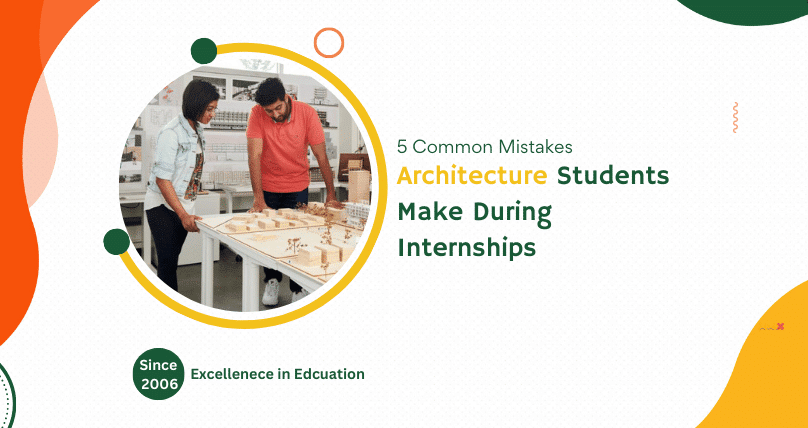
5 Common Mistakes Architecture Students Make During Internships

For architecture students, internships are a turning point. This is where classroom theory meets real-world practice. Whether you’re pursuing architecture courses after 12th science or an advanced architecture designing course, internships shape how you think, work, and grow as a future architect.

5 Common Mistakes Architecture Students Make During Internships

However, many students unknowingly make mistakes during internships that limit their learning. At Kalapurnam Institute, known for offering some of the best architecture courses in Ahmedabad, we strongly believe that awareness is the first step toward improvement.

Let’s look at the 5 most common mistakes architecture students make during internships—and how you can avoid them.

Why Architecture Internships Matter

Architecture is not just about drawing buildings—it’s about understanding materials, construction methods, site coordination, client needs, and teamwork.

According to industry surveys, over 80% of architecture firms in India prefer hiring candidates with strong internship experience. Internships help you:

  • Apply academic knowledge practically
  • Understand office workflows
  • Gain site experience
  • Build a professional portfolio
  • Improve employability

That’s why internships are a crucial part of architecture education.

Mistake #1: Treating the Internship Like a College Assignment

One of the biggest mistakes students make is treating internships like just another college project.

What Goes Wrong:

  • Waiting for instructions instead of taking initiative
  • Not understanding professional deadlines
  • Avoiding responsibility

In an architecture firm, every drawing and site decision has real-world consequences. Unlike college assignments, your work may directly affect a project’s execution.

How to Avoid It:

  • Take ownership of tasks
  • Understand the purpose behind each drawing
  • Respect timelines and professional standards

This mindset shift makes a huge difference in how seniors perceive you.

Mistake #2: Not Asking Questions or Seeking Guidance

Many students hesitate to ask questions because they fear sounding inexperienced. But silence often leads to missed learning opportunities.

Why This Is a Problem:

  • Architecture involves complex detailing and coordination
  • Mistakes can be avoided by clarifying doubts early
  • Learning slows down without interaction

According to mentors, students who actively ask questions learn 40% faster than those who remain silent.

How to Improve:

  • Ask relevant questions at the right time
  • Observe senior architects and site engineers
  • Request feedback on your drawings

Good communication is a key skill every architect must develop.

Mistake #3: Ignoring Site Work and Practical Exposure

Many architecture students prefer office work—AutoCAD drawings, 3D views, and presentations—while avoiding site visits.

Why Site Experience Is Crucial:

  • Architecture in India is heavily execution-driven
  • Site knowledge helps you design better buildings
  • Understanding materials, labour, and construction methods is essential

Industry data shows that architects with strong site experience grow faster in their careers than those with only design exposure.

What You Should Do:

  • Actively participate in site visits
  • Learn measurements, supervision, and coordination
  • Understand how drawings turn into structures

At Kalapurnam Institute, site understanding is strongly emphasised in our architecture designing course.

Mistake #4: Poor Time Management and Professional Discipline

Professional discipline is non-negotiable in architecture firms.

Common Issues:

  • Reaching late to office or site
  • Missing deadlines
  • Disorganised drawings and files
  • Casual attitude towards communication

These habits create a negative impression and can cost you future job opportunities.

How to Stay Professional:

  • Be punctual and organised
  • Maintain proper file naming and documentation
  • Communicate clearly with seniors and team members

Architecture firms value discipline as much as creativity.

Mistake #5: Not Building a Portfolio or Documenting Work

Internship time is gold—but many students fail to document their work properly.

Why This Is a Big Loss:

  • Internships offer real project exposure
  • Your internship portfolio becomes a major career asset
  • Future employers and colleges evaluate portfolios first

Studies show that nearly 70% of hiring decisions in architecture depend on portfolio quality.

Best Practices:

  • Save drawings, concepts, and site photos (with permission)
  • Maintain a digital folder of your work
  • Note your learning and role in each project

A strong portfolio can open doors to better jobs and higher studies.

Additional Common Mistakes to Avoid

Apart from the major ones, students should also avoid:

  • Overconfidence or ego
  • Ignoring feedback
  • Avoiding teamwork
  • Not respecting office culture

Architecture is a collaborative profession, and attitude matters a lot.

How Architecture Students Can Make the Most of Their Internship

Here’s how you can turn your internship into a career booster:

  • Be observant and proactive
  • Take responsibility for tasks
  • Learn both design and execution
  • Network with architects, engineers, and contractors
  • Be open to feedback and improvement

These habits can help you stand out even as an intern.

Skills Architecture Interns Should Focus On

During your internship, focus on developing:

  • Technical drawings and detailing
  • Construction knowledge
  • Software skills (AutoCAD, SketchUp, Revit, Lumion)
  • Communication and coordination
  • Time management

These skills are strongly emphasised in the best architecture courses in Ahmedabad at Kalapurnam Institute.

Industry Expectations from Architecture Interns in India

Architecture firms expect interns to:

  • Be punctual and disciplined
  • Show willingness to learn
  • Have basic technical and site knowledge
  • Maintain a professional attitude

Meeting these expectations increases your chances of getting hired post-internship.

Why Kalapurnam Institute Prepares Students Better

At Kalapurnam Institute, we prepare students for real-world architecture challenges through:

  • Practical-based teaching
  • Industry-oriented curriculum
  • Internship guidance and mentorship
  • Portfolio development support

Our programs are designed for students pursuing architecture courses after 12th science as well as advanced learners.

FAQs

1. What is the ideal duration of an architecture internship in India?

Most internships last between 4–6 months, depending on the course structure.

2. Should architecture interns focus more on design or site work?

Both are important, but site work is crucial for practical understanding.

3. How important is internship experience for getting a job?

Extremely important. Many firms hire interns as full-time employees.

4. Can internship work be included in an architecture portfolio?

Yes, with permission. Internship projects strengthen your portfolio significantly.

5. Can I join architecture courses after 12th science?

Yes, students from science backgrounds can pursue architecture after 12th through recognised institutes.

Conclusion

Internships are not just mandatory—they are transformative. Avoiding common mistakes during your internship can shape your confidence, skills, and future career as an architect.

If you’re serious about building a strong foundation, choose the best architecture courses in Ahmedabad at Kalapurnam Institute, where learning goes beyond classrooms and prepares you for real professional challenges.

Design smart. Learn practically. Build your future with Kalapurnam Institute.

Architecture Courses After 12th That Open Doors to a Creative Future

If you’ve recently completed your 12th and have a passion for design, construction, and creativity, a career in architecture could be your ideal choice. From skyscrapers and urban planning to eco-friendly homes and smart cities, architects are at the forefront of shaping how India lives and grows. And if you’re from Gujarat, checking out architecture courses in Ahmedabad is a great starting point.

Architecture Courses After 12th That Open Doors to a Creative Future

In this blog, we’ll walk you through all the important aspects of architecture courses after 12th—course types, eligibility, entrance exams, skills required, and career options.

Why Choose Architecture After 12th?

  • Growing Industry: India’s construction market is expected to reach USD 1.4 trillion by 2025, creating huge demand for skilled architects.

  • Blend of Art + Engineering: Architecture blends creativity with practical structural design.

  • Global Scope: Architects are in demand globally—from Dubai’s futuristic designs to Europe’s heritage conservation.

  • Good Pay: Fresh graduates can earn ₹3–5 LPA, and experienced architects go beyond ₹10–20 LPA.

Popular Architecture Courses After 12th

1. Bachelor of Architecture (B.Arch)

  • Duration: 5 years

  • Eligibility: 10+2 with Physics, Chemistry & Mathematics (PCM) + NATA or JEE Main Paper 2

  • Career Options: Licensed Architect, Urban Planner, Interior Designer, Project Manager

2. Diploma in Architecture Engineering

  • Duration: 3 years

  • Eligibility: 10th or 12th pass with Science

  • Scope: Entry-level roles in construction companies, CAD drafting, and project assistance

3. B.Sc in Architecture & Planning

  • Duration: 3 years

  • Eligibility: 10+2 in Science stream

  • Ideal For: Students who want theoretical and design foundations before going for a master’s

4. Bachelor of Interior Design / Landscape Design

  • Duration: 3–4 years

  • Focus: Niche specializations within architecture, focused on interiors, greenery, and urban ecology

Skills Required for Architecture Courses

Skill Why It’s Important
Creativity & Visualisation Helps in design and concept development
Technical Drawing Skills Essential for CAD, blueprints, and planning
Mathematical Aptitude For accurate measurements and structure planning
Communication Skills To deal with clients, engineers, and project teams
Problem-Solving Ability To resolve space, budget, and structural issues

Architecture Course at Kalapurnam Institute Ahmedabad

Kalapurnam Institute offers a specialized program for aspiring architects that combines theoretical design with hands-on technical skills.

🏛 Key Highlights:

  • Course Modules: History of Architecture, CAD Drafting, Building Materials, Structural Design, and Urban Planning

  • Software Skills: AutoCAD, Revit, SketchUp, Lumion, and Photoshop

  • Live Project Exposure: Real-world project simulation, site visits, and internships

  • Faculty: Experts from architectural and civil engineering backgrounds

  • Career Support: Resume building, job placement guidance, and personal mentoring

Whether you’re interested in becoming a professional architect or pursuing related careers like 3D modeling or real estate planning, Kalapurnam provides the right foundation.

To explore more creative careers, you can also check courses after 12th in Ahmedabad that include design, animation, and fine arts.

Career Opportunities After Architecture Courses

  • Architect

  • Urban Planner

  • Interior Designer

  • Project Architect

  • Set Designer (Film & TV)

  • Town Planner

  • Sustainable Design Expert

According to the Indian Institute of Architects, the country needs over 100,000 new architects by 2030 due to rapid urbanization and infrastructure projects.

Emerging Trends in Architecture

  • Sustainable & Green Architecture

  • Smart Cities & Urban Planning

  • 3D Printing in Construction

  • Use of AI & BIM (Building Information Modeling)

  • Adaptive Reuse & Heritage Restoration

Students trained in such modern approaches will be better positioned to work on large-scale government and private infrastructure projects.

Final Words

Choosing architecture after 12th is not just a career decision—it’s a life-changing journey where your creativity helps build the world around you. With a mix of science, art, and innovation, architecture opens doors to national and international opportunities. Institutes like Kalapurnam Institute Ahmedabad help you start strong with practical training, design software skills, and portfolio development.

So, if building beautiful spaces excites you—architecture is calling!

People Also Ask – FAQs

  1. Which architecture course is best after 12th?
    The Bachelor of Architecture (B.Arch) is the most recognized and widely pursued course in India.
  2. Is NATA compulsory for architecture?
    Yes, most universities and institutes require NATA scores for B.Arch admissions.
  3. Can I do architecture without Maths in 12th?
    No, Mathematics is a mandatory subject for architecture courses like B.Arch in India.
  4. What is the average salary after B.Arch in India?
    Freshers usually earn ₹3–5 LPA, while experienced architects can earn ₹10–20 LPA.
  5. Is diploma in architecture a good career option?
    Yes, especially if you want to enter the workforce early or explore niche roles like CAD designing or site supervision.

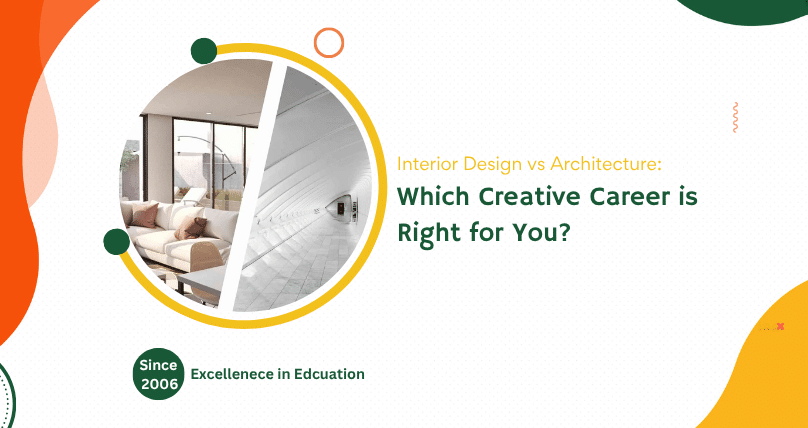
Interior Design vs Architecture: Which Creative Career is Right for You?

Ever Caught Between Two Design Worlds?

Choosing a career in the creative field is an experience similar to standing at a design crossroads: 

Should I go for Architecture, or

Should I choose Interior Design? 

Interior Design vs Architecture Which Creative Career is Right for You

At first glance, these two might be considered perfectly interrelated: they both shape spaces, work on aesthetics, and demand creativity. However, their principles, tools, and end goals are quite distinct.

At the Kalapurnam Institute, one of the best places to pursue architecture and the best interior design course in Ahmedabad, we understand the confusion faced by so many students when making this choice. This detailed blog will help untangle all differences and will help you determine which creative career is your perfect match.

Let’s Talk Definitions First

What is Architecture? 

Architecture is the science and the art of designing physical structures and buildings, a discipline that balances engineering and aesthetics. Architects essentially plan and oversee building projects and ensure that these are safe, usable, and environmentally friendly. Through their designs, they ensure how cities operate and how people live, work, and connect with their surroundings.

What is Interior Design? 

Interior Design refers to the art and science of elevating the interiors of space to create a healthier, more practical, and visually appealing space. Here, Interior designers work on layouts, materials, furnishings, lighting, and color schemes to make the dream space resonate with your lifestyle. It’s all about designing a space that speaks to the personality and purpose of the people. 

The Core Differences – A Comparative View

Factor  Architecture Interior Design
Focus Structural and external design Internal space planning and decoration
Tools AutoCAD, Revit, BIM, Sketching AutoCAD, SketchUp, 3D Max, Photoshop
Duration 5 Years (B.Arch) 3 Years (BSc or Diploma)
PCM Required? Yes Not always
Creativity Type Technical + Conceptual Stylistic + Emotional
Career Launch Slower, post-licensure or degree Quicker, freelance/project-based

Skills & Tools You’ll Use

Architects need a solid foundation in physics and mathematics, a deep understanding of construction processes, spatial reasoning, and a strong aesthetic sensibility. They rely heavily on drafting software, structural modeling tools, and compliance standards. Only the best architecture institute in Ahmedabad can teach you the standards and techniques to be a successful architect. 

Interior Designers lean on creativity, color theory, space functionality, and material knowledge. They work with software like 3D Studio Max, AutoCAD, and Photoshop to visualize ideas and often collaborate with architects and clients.

Common Workspaces

Where Architects Work:

  • Construction companies
  • Real estate development firms
  • Government planning bodies
  • Urban design consultancies
  • Infrastructure projects (airports, bridges, smart cities)

Where Interior Designers Work:

  • Residential and commercial design firms
  • Retail outlets and showrooms
  • Hospitality industry (hotels, restaurants, resorts)
  • Event and exhibition design agencies
  • Freelance or own studio

Career Paths & Opportunities

Architecture:

  • Architect
  • Urban Planner
  • Landscape Architect
  • Building Designer
  • Sustainable Design Consultant

Interior Design:

  • Interior Designer
  • 3D Visualizer
  • Space Planner
  • Set Designer
  • Freelance Consultant

How to Get Started

Becoming an Architect:

  1. Complete 10+2 with PCM.
  2. Clear NATA or JEE (Paper 2A or AAT).
  3. Enroll in a recognized B.Arch program (5-year).
  4. Optionally pursue M.Arch or PhD for specialization.
  5. Gain experience through internships and license eligibility.

Top Architecture Institutes:

  • Kalapurnam Institute (Ahmedabad )
  • CEPT University (Ahmedabad)
  • School of Planning & Architecture (Delhi)
  • Sir J.J. College of Architecture (Mumbai)

Becoming an Interior Designer:

  1. Complete 10+2 (any stream; some institutes require PCM).
  2. Clear entrance exams for design colleges.
  3. Join a B.Sc. Interior Design course or Diploma.
  4. Gain hands-on experience through internships.
  5. Choose advanced courses like M.Sc. (Interior Design) or specializations.

Top Interior Design Institutes:

  • Kalapurnam Institute – Best Interior Design Course in Ahmedabad
  • National Institute of Design (Ahmedabad)
  • CEPT University (Ahmedabad)
  • Sir JJ School of Art (Mumbai)

What Kind of Creative Are You?

Choose Architecture If You:

  • Are good with numbers and logic
  • Think in 3D
  • Enjoy structural design and planning
  • Want to shape cities and landscapes

Choose Interior Design If You:

  • Have a flair for aesthetics and color
  • Think from a user-experience angle
  • Love curating furniture, lights, textures
  • Want to transform dreams into beautiful spaces

Real Talk: What the Industry Wants

The creative industry is experiencing rapid growth in India and globally. Architecture is gravitating toward sustainable, smart infrastructure. Interior design is harnessing AI, wellness design, and modular spaces. There is a great opportunity for creative minds who can tackle contemporary spatial problems with fresh, innovative thought.

Kalapurnam Institute takes pride in being a comprehensive learning environment for both disciplines. Being the leading architecture institute in Ahmedabad and a reputable name for the study of the best interior design course in Ahmedabad, we make sure that students do their best. We provide comprehensive, technology-driven, and globally benchmarked training that equips our students with a strong foundation and advanced expertise in the subject.

Final Thoughts: Which One’s for You?

Both fields are rewarding, and your decision depends on your creative instincts, academic strength, and vision for the future.

Do you want to start designing the world from the ground up? Or do you want to transform existing spaces into something cool? 

Both careers require time and passion, but starting on the right course at the right institute is the trick to it all.

If you’re still confused, then let’s have a conversation with our experts.

Visit Kalapurnam Institute, explore our institute, talk with career counselors, and choose a program that fits your dreams. Whether it’s Interior Design or Architecture, your future in design begins here.

Book a FREE counseling session today.

5 Best Professional Career-Making Design Courses

Looking to start an exciting new creative career? With correct design training, you can gain the in-demand skills for great jobs doing what you love.

5 Best Professional Career-Making Design Courses

Career-making design courses at Kalapurnam Institute are a great way to learn the skills and knowledge you need to succeed in different fields. Our courses are taught by experienced professionals who can share their knowledge and expertise with you.

Why Are Design Courses Trending Among Career Seekers?

Creative Careers:

Design careers are growing fast. Many new creative jobs in graphics, fashion, architecture, and marketing. Taking a design course teaches skills needed for these careers.

Modern Skills:

Design software and tools are always improving. New-age employers want people with the latest design training. Design courses teach new programs and methods.

Stay Competitive:

Thousands of people want creative careers. Taking a design course helps you stand out. They help gain an advantage over others competing for jobs.

Build a Portfolio:

Design courses help you make projects and concepts. These go in your portfolio to show employers your skills.

5 Professional Career-Making Design Courses

1. Graphic Design Course

Graphic design courses encompass different creative disciplines that help students develop their creative skills. People with a creative knack for drawing or designing digital illustrations can opt for this course.

 Careers in Graphic design:

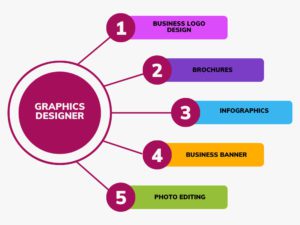
Graphic Design career
  • Logo Designer
  • Product Designer
  • Creative Director
  • Communication Designer
  • Packaging Designer
  • Graphic Designer
  • Vector Designer

2. Interior Design Course

Interior design course helps learn the art and science of enhancing the interior of a building to achieve a healthier and more aesthetically pleasing environment.

Careers in Interior design:

Interior Design Institute

Interior Design Institute

  • Pre-production
  • Interior Designer
  • Home Decor Artist and Consultant
  • Color Consultant
  • Interior Walkthrough Artist
  • Vastu Consultant

3. Fashion Design Course

Fashion design is the art of creating clothing and accessories. Fashion designers work in different settings, including design houses, textile mills, and retail stores.

Careers in Fashion Designing:

Fashion Design Course Institute

Fashion Design Course Institute

  • Freelance fashion designer
  • Fashion Stylist
  • Textile Designer
  • Fashion Trend Analyst
  • Assistant Designer
  • Full-time fashion designer
  • Fashion Blogger

4. Architecture Design Course

Architecture Design Course Institute

The architecture design course helps you learn the process of planning, designing, and constructing establishments and other structures. 

Careers in Architecture:

Architecture Design Course Institute

  • Urban Planner
  • Restoration Architect Designer
  • Landscape Designer
  • Furniture Designer
  • Architectural Walkthrough Artist

5. Digital Marketing and Branding Course

Digital Marketing Course Institute

Digital marketing and branding courses help you learn how to use digital channels to promote and brand products or services.

Careers in Digital Marketing:

  • Digital marketing manager/ consultant
  • Digital sales executive
  • SEO Specialist
  • Social Media Marketing expert
  • Content marketing executive

Benefits of Taking Design Courses At Kalapurnam Institute:

  • Learn from experienced professionals and gain the skills and knowledge you need to succeed in your chosen field.
  • Develop your creativity and problem-solving skills.
  • Build a portfolio of work that you can use to showcase your skills to potential employers or clients.
  • Network with other professionals in your field.
  • Gain a competitive advantage in the job market.

Who Should Do Design Courses?

Design courses are a great way to learn the skills and knowledge necessary to pursue a successful career in various fields. If you are creative, have an eye for detail, and are interested in solving problems, then a design course may be right for you.

People who should consider taking design courses include:

Artists and creative individuals –

People who want to learn how to use their skills to create appealing and functional products, and services.

Business professionals – 

People who want to learn how to use design principles to create effective marketing and branding campaigns.

Technologists –

People who want to learn how to design user-friendly interfaces for software and hardware products.

Entrepreneurs 

People who want to learn how to design products and services that meet the needs of their target market.

Students –

Students, especially those who have passed out from 10th or 12th grade should opt for design courses. These courses can help them learn skills that are detrimental to building successful careers. They will be able to learn from an early age all the design skills needed for a strong career portfolio.

Why Take Design Courses at Kalapurnam Institute?

Design courses at our institute are a great way to learn skills. Here are the following reasons why you should opt for our design courses:

  • Learn from expert teachers: 

Our design courses are taught by experienced professionals who have worked in the industry for many years. They can share their knowledge and expertise with you, and help you develop the skills and knowledge you need to succeed in your chosen field.

  • Gain the skills and knowledge you need to succeed: 

Our design courses teach you the skills and knowledge you need to succeed in various design fields. Whether you’re interested in graphic design, interior design, fashion design, or architecture design, we have a course that’s right for you.

  • Develop your creativity and problem-solving skills: 

Design courses help you develop your creativity and problem-solving skills which are essential for success in any field. You’ll learn how to think outside the box and come up with creative solutions to problems.

  • Placement opportunities: 

We have a strong track record of placing students in successful careers. We work with many leading companies in the design industry to place our graduates in jobs that match their skills and interests.

Join Kalapurnam Institute For The Best Design Courses

Take design courses at our institute. The teachers at Kalapurnam Institute are experts who work in their field. They know the latest skills and tools to teach you. Our design courses are affordable compared to other institutes. We help students find jobs after finishing. Launch your creative career with our design training. These courses give real-world skills to succeed.

KalaPurnam Institute - Professional courses in ahmedabade
Whatsapp Icon