

Curious About Course?    Get Free Demo Class Now

Tag: fashion designing courses in Ahmedabad

Top Fashion Designing Techniques Beginners Must Learn

Fashion is not just about making beautiful outfits but is a combination of creativity, skill sets, fabric expertise, and knowing what people want to wear. If one wants to make their career in fashion, then it becomes imperative that they learn these techniques from the start itself.

It is this very reason that makes choosing the right fashion designing courses in Ahmedabad so important for all those who wish to have proper training.

In this article, we will be looking at some of the top fashion designing techniques that beginners must learn.

1. Fashion Illustration and Sketching

Nobody picks up a sewing machine first. Every design starts as a sketch.

Sketching is how you see an outfit in your head before it exists in real life. It’s also how you get a tailor or client to understand exactly what you’re picturing.

Things worth practicing early on:

  • Body proportions
  • Basic croquis poses
  • Garment detailing
  • Fabric texture rendering
  • Simple digital sketching

Take a bridal lehenga, for example. A quick sketch tells you right away where the embroidery should sit, how the sleeves should fall, and how the dupatta drapes.

2. Fabric Knowledge

Here’s something a lot of beginners underestimate: the exact same design can look totally different depending on the fabric you choose.

You’ll want to get comfortable working with:

  • Cotton
  • Silk
  • Linen
  • Chiffon
  • Georgette
  • Denim
  • Satin

Cotton’s your everyday go-to. Silk shows up in festive collections. Denim holds its shape well for casual pieces.

Honestly, spending an afternoon at one of Ahmedabad’s fabric markets will teach you more about drape and texture than any textbook chapter.

3. Pattern Making

This is the part that trips up most beginners, but it’s also non-negotiable.

A pattern is basically your garment’s blueprint. Mess it up, and no amount of good fabric or careful stitching will save the fit.

You’ll usually start practising patterns on simpler pieces:

  • Shirts
  • Kurtis
  • Trousers
  • Basic dresses
  • Simple jackets

It feels slow and technical at first. But this is genuinely what separates someone who “loves fashion” from someone who’s actually trained to design it.

4. Garment Construction

Once your pattern’s ready, the real building begins.

Construction covers the nuts and bolts of putting a garment together:

  • Basic seams
  • Darts and pleats
  • Neckline finishing
  • Sleeve attachment
  • Zippers and buttons
  • Hemming

Even if you never stitch a single garment yourself as a designer, you still need to know this stuff. Otherwise, explaining your vision to a production team turns into a guessing game.

5. Draping Techniques

Draping is where the rulebook gets a little looser, and creativity takes over.

Instead of working things out on paper, you pin and shape fabric right onto a dress form. It’s messier, more intuitive, and honestly a lot more fun once you get the hang of it.

You’ll see draping used a lot for:

  • Bridal gowns
  • Evening wear
  • Designer sarees
  • Indo-western outfits

A lot of Indian designers lean on draping specifically because it gives them those flowing, unique silhouettes that a flat pattern just can’t replicate.

6. Colour Theory

Colour sells clothes, whether we like admitting it or not.

A few basics go a long way here:

  • The colour wheel
  • Warm vs cool tones
  • Complementary combinations
  • Seasonal palettes

Pastels take over in summer. Come wedding season, it’s all deep maroon, emerald green, and royal blue. Knowing this rhythm helps you design collections that actually sell.

7. Textile Printing and Surface Embellishment

Plain fabric rarely stays plain for long in Indian fashion, and honestly, that’s part of the charm.

Techniques worth exploring:

  • Block printing
  • Screen printing
  • Digital printing
  • Embroidery
  • Mirror work
  • Sequin work

India’s textile traditions are seriously rich. Learning even a few of these crafts gives your designs a personality that mass-produced prints just don’t have.

8. Fashion CAD (Computer-Aided Design)

Pen and paper only take you so far these days.

Fashion CAD software lets you:

  • Sketch digitally
  • Build proper tech packs
  • Try out colour variations fast
  • Prepare production-ready sheets

Programs like Adobe Illustrator, CorelDRAW, and CLO 3D aren’t optional extras anymore. Most studios expect at least basic comfort with one of these before they even consider a fresher.

9. Fashion Trend Research

Trends move fast, but the good designers don’t just copy-paste what’s trending on Instagram.

Worth keeping an eye on:

  • Fashion weeks
  • Celebrity styling
  • Social media trends
  • Fabric innovations
  • Sustainable fashion movements

The trick is adapting global trends to Indian body types, weather, and occasions, rather than lifting them exactly as they are.

10. Portfolio Development

Your portfolio does the talking before you even open your mouth in an interview.

A solid one usually has:

  • Fashion sketches
  • Mood boards
  • Fabric samples
  • Finished projects
  • Design concepts

Most clients and recruiters judge your skill from your portfolio first. Start building it from your very first project, not once you feel “ready.”

Practical Tips for Beginners

  • Sketch daily, even messy ideas count
  • Visit fabric markets whenever you can
  • Actually watch how people dress around you
  • Follow designers, Indian and global
  • Learn basic sewing no matter what you specialise in
  • Spend time weekly on CAD software
  • Document every single project you finish

Small habits repeated often beat occasional bursts of motivation. Every single time.

Common Mistakes Beginners Should Avoid

  • Ignoring how a garment actually fits
  • Skipping fabric testing before cutting
  • Copying designs instead of creating your own
  • Piling on embellishments unnecessarily
  • Slacking on sketching practice
  • Putting off portfolio building
  • Avoiding digital tools out of fear
  • Forgetting the wearer’s comfort altogether

Most of these are easy fixes when caught early. Left alone, they get expensive fast.

How These Skills Create Career Opportunities

India’s fashion industry keeps expanding, especially across retail, e-commerce, bridal wear, and sustainable fashion.

Students coming out of fashion designing courses in Ahmedabad often land roles like:

  • Fashion Designer
  • Fashion Illustrator
  • Pattern Maker
  • Textile Designer
  • Fashion Stylist
  • Boutique Owner
  • Freelance Designer

Quite a few end up starting their own labels eventually, once they’ve paired their creative skill with some business sense.

Conclusion

Fashion designing is a mixture of creativity and practicality. Skills like drawing, draping, pattern making, and fabric knowledge help a beginner feel more confident about doing things practically.

For those who take this profession seriously, fashion designing courses in Ahmedabad provide the right training that makes one ready for the professional world. Kalapurna Institute provides all of this right from the very first day.

FAQs

  1. Which methods must be learned first by beginners?
    Sketching, fabrics, pattern-making, garment creation, and colour theories must be the ones learnt first because all others are learnt based on these.
  1. Are there any fashion designing courses in Ahmedabad for beginners?
    Yes, the majority of them are made especially for this purpose. They normally cover all stages starting from sketching to creating a portfolio.
  1. Is drawing necessary for becoming a fashion designer?
    Not really. Drawing becomes better the more one practises. Skills and knowledge of construction are equally, or even more, important.
  1. How much time does it take to learn fashion designing?
    It depends on the program that you enroll in. Certificates may require a few months, whereas diploma courses can be of one to three years.
  1. Can I form my own brand after completing the course?
    Yes, of course. There are many fashion designers who have done precisely that after gaining substantial experience.
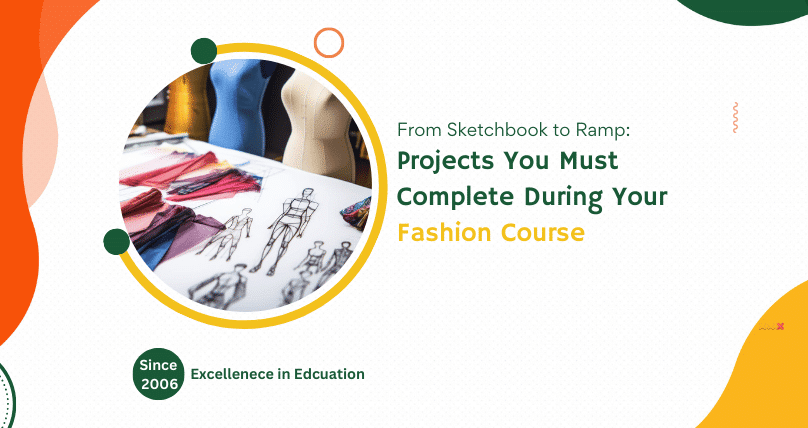
From Sketchbook to Ramp: Projects You Must Complete During Your Fashion design Course

Becoming a fashion designer is not just about creativity—it’s about practice, experimentation, and real-world exposure. A good fashion designer course takes you on a complete journey, starting from basic sketching and ending on the ramp with your own collection.

From Sketchbook to Ramp Projects You Must Complete During Your Fashion Course

If you’re planning to join fashion designing courses in Ahmedabad, it’s important to know what kind of practical projects you’ll work on. At Kalapurnam Institute, one of the leading institutes of fashion design in Ahmedabad, students learn through hands-on projects that prepare them for the fashion industry.

Let’s walk you through the exciting projects that turn a beginner into a confident fashion professional.

Why Practical Projects Are the Backbone of Fashion Courses

Fashion is a skill-based profession. No matter how good your theory is, real learning happens only when you create something with your own hands.

According to industry reports, over 75% of fashion recruiters prefer candidates with strong portfolios rather than only academic certificates. That’s why project-based learning is essential in fashion education.

Practical projects help you:

  • Build confidence

  • Improve creativity

  • Understand fabrics and garments

  • Create a strong portfolio

  • Get industry-ready

This is why top fashion designing courses in Ahmedabad focus heavily on project work.

Sketching & Fashion Illustration Projects

Every fashion journey begins with a sketchbook.

What You Work On:

  • Basic figure drawing

  • Fashion poses and proportions

  • Colour rendering

  • Fabric texture illustration

  • Manual and digital sketching

These projects help students express ideas visually. Whether you’re joining an after 10th fashion designing course or later, sketching is the foundation of fashion design.

Mood Boards & Concept Development Projects

Before designing clothes, designers research and plan concepts.

Projects Include:

  • Theme-based mood boards

  • Colour palette development

  • Trend research

  • Inspiration mapping

  • Concept-to-design translation

This stage teaches you how professional designers plan collections for brands and fashion weeks.

Fabric & Textile Exploration Projects

Understanding fabric is crucial in fashion design.

Hands-on Textile Projects:

  • Fabric identification

  • Swatch book creation

  • Surface ornamentation

  • Tie-dye, block printing, embroidery

  • Fabric manipulation techniques

India’s rich textile heritage makes this module especially important. Students gain strong knowledge of materials used in real production.

Pattern Making & Garment Construction Projects

This is where sketches turn into real garments.

Key Projects:

  • Drafting basic blocks

  • Pattern alteration and grading

  • Stitching garments

  • Finishing techniques

  • Fit and silhouette development

These projects give you practical tailoring skills, which are essential for working in boutiques, brands, or starting your own label.

Traditional & Indian Wear Design Projects

Indian fashion is a huge market, valued at over ₹1.5 lakh crore.

Projects Focus On:

  • Sarees, lehengas, kurtis, sherwanis

  • Indian embroidery styles

  • Ethnic textiles

  • Fusion wear concepts

This module is extremely useful for students who want to work in ethnic fashion or bridal wear.

Western Wear & Contemporary Fashion Projects

Modern fashion demands global knowledge.

Projects Include:

  • Casual wear

  • Formal wear

  • Party wear

  • Streetwear collections

  • Trend-based outfits

Students learn how to adapt international trends for Indian consumers—an important skill for today’s fashion designers.

Accessory & Styling Projects

Fashion is not complete without styling.

Styling Projects Cover:

  • Jewellery design

  • Bags and footwear concepts

  • Styling garments for photoshoots

  • Look coordination for fashion shows

These projects help students understand how styling enhances garment appeal.

Digital Fashion & Software-Based Projects

Technology plays a major role in modern fashion.

Digital Projects Include:

  • Digital flats using Illustrator

  • Print design using Photoshop

  • Tech packs

  • Digital portfolio creation

Students trained in fashion software have 30–40% better placement opportunities, according to industry data.

Sustainable & Eco-Friendly Fashion Projects

Sustainability is the future of fashion.

Eco-Fashion Projects:

  • Upcycling old garments

  • Zero-waste pattern making

  • Sustainable fabric research

  • Recycling-based designs

With sustainable fashion growing at 10% annually, this module adds great value to your career.

Collection Development Project

This is the highlight of every fashion designer course.

Final Collection Includes:

  • Theme selection

  • Colour and fabric planning

  • Design development

  • Complete outfit collection

  • Presentation boards

This project becomes the centrepiece of your fashion portfolio.

Fashion Show / Ramp Walk Projects

From sketchbook to ramp—this is where it all comes together.

Ramp Projects Include:

  • Garment fitting

  • Model coordination

  • Backstage preparation

  • Ramp presentation

  • Show choreography basics

Participating in fashion shows builds confidence and gives real industry exposure.

Portfolio Development Projects

Your portfolio is your fashion resume.

Portfolio Projects Help You:

  • Select best work

  • Organise designs professionally

  • Create physical and digital portfolios

  • Present work confidently to recruiters

A strong portfolio is often the deciding factor in job placements and freelance opportunities.

Industry Internship & Live Projects

Top institutes of fashion design in Ahmedabad focus on industry exposure.

Internship Benefits:

  • Real client work

  • Industry discipline

  • Understanding deadlines

  • Networking opportunities

Many students receive job offers through internships.

How These Projects Prepare You for the Fashion Industry

By the end of your course, you’ll be able to:

  • Design independently

  • Work with fabrics confidently

  • Understand production processes

  • Communicate design ideas professionally

  • Handle real fashion assignments

This makes you job-ready from day one.

Why Kalapurnam Institute Focuses on Project-Based Learning

At Kalapurnam Institute, our fashion designing courses in Ahmedabad are designed around practical learning.

What Makes Us Different:

  • Industry-relevant projects

  • Expert mentors

  • Modern labs

  • Fashion shows & exhibitions

  • Strong placement support

Whether you’re joining a fashion designer course after 10th or later, we ensure complete skill development.

Conclusion

A fashion designing course is much more than classroom learning—it’s a creative journey from sketchbook to ramp. The projects you complete shape your skills, confidence, and career direction.

If you’re serious about building a career in fashion, choose fashion designing courses in Ahmedabad at Kalapurnam Institute, where learning happens through real design experiences.

Turn your passion into a profession. Enrol today at Kalapurnam Institute!

FAQs

1. What projects are mandatory in a fashion designing course?

Sketching, garment construction, collection development, and portfolio projects are compulsory.

2. Can I join a fashion designing course after 10th?

Yes, many students start with an after 10th fashion designing course.

3. Do fashion projects help in getting jobs?

Absolutely. Recruiters focus more on portfolios than marks.

4. How many collections do students design during a course?

Students usually design 2–4 mini collections and 1 major collection.

5. Can I start my own boutique after completing the course?

Yes, many Kalapurnam students successfully start their own labels or boutiques.

Authentication of Certificate

VERIFY YOUR CERTIFICATE
Admissions Open: 100% Placement Support
AHMEDABAD
KalaPurnam Institute - Professional courses in ahmedabade
Whatsapp Icon